
by Dina D’Ayala, Elena Speranza
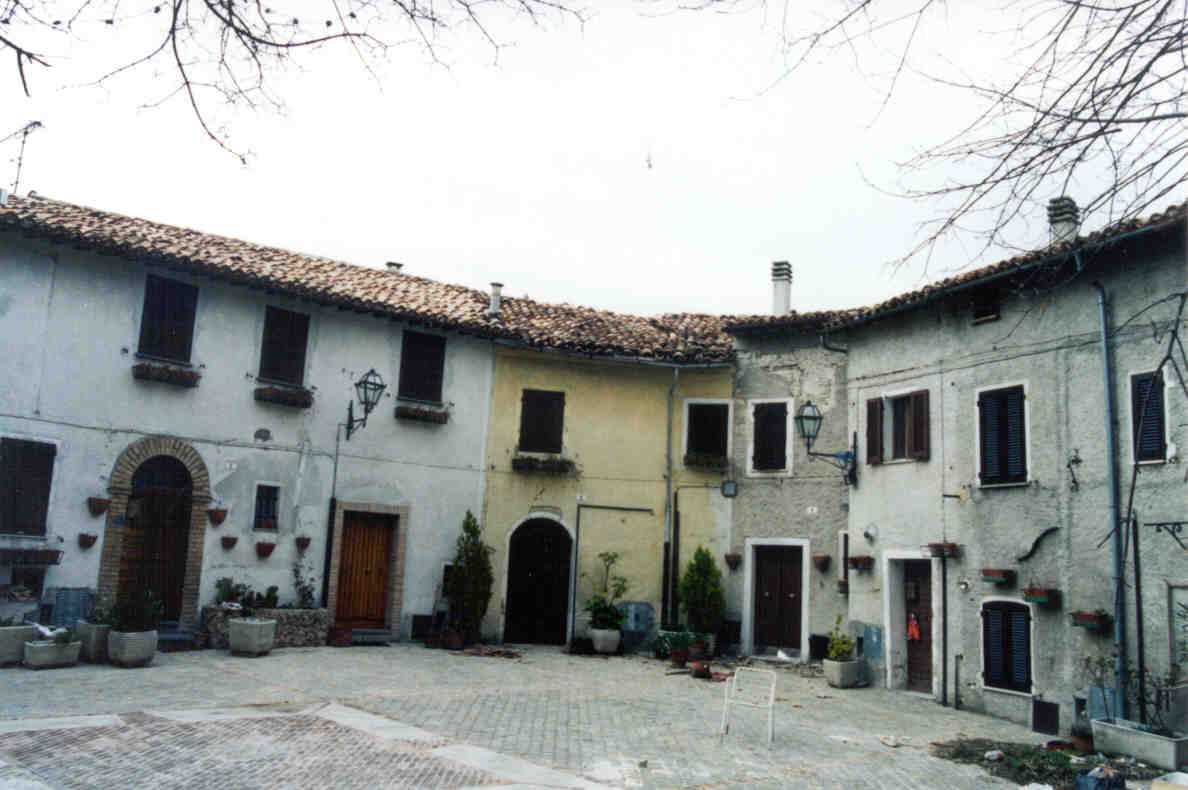
These buildings form the historic centers of most hilltop villages and towns in central Italy. They are arranged in long terraced clusters. Hillside dwellings have common walls and a variable number of stories (up to 2 or 3). Buildings situated in the valley usually have 4 or 5, with a maximum of 6, stories. The typical house is usually formed by one or two masonry cells, depending on the depth of the block, and with a staircase (usually but not necessarily) running along the common wall. The masonry is made of roughly squared stone blocks set in lime mortar, and the walls are made of two leaves with a rubble core at the base, tapering at the upper floors. Limestone is used for the blocks, while a particular type of tuffa stone is used for the lintels above the openings. At the ground level there are sometimes vaulted structures. The upper stories were originally spanned by timber beams, with joist and timber boards covered by tiles. The roof structure is usually original and made of timber trusses. In the recent past, many of the original floors have been replaced either with iron ‘I’ beams and jack arches (renovations occurring before World War II), or during the last fifty years, with weakly reinforced concrete slabs. Other alterations include vertical extensions, the closing and opening of windows, and introduction of hygienic services. A high proportion of these houses exhibit the traditional iron ties introduced in the 18th century to tie together the orthogonal walls and floors for better seismic performance. After the introduction of modern seismic codes in the 1980s, many buildings have undergone further strengthening through the use of RC ring beams and concrete jacketing of walls.